 Amsterdam




You are not sure
Ubuntu has the widest documentation, which makes it the easiest place to start.
From everyday Linux distributions to Windows Server, network appliances and your own ISO, compare the options before you deploy.
from$5.52/mo
$11.04/mo when billed monthly.
Each page explains what that system is best at.
Your software usually decides this for you.
Ubuntu has the widest documentation, which makes it the easiest place to start.
Debian and the enterprise-style AlmaLinux and Rocky Linux change slowly and predictably.
Windows Server is the choice for RDP desktops and applications built for Windows.
RouterOS suits network roles, and a custom ISO lets you install almost anything else.
A starting point. Always check what your own software supports.
| Best for | Good to know | |
|---|---|---|
| Ubuntu | Most web apps and beginners | Choose an LTS release for long-lived servers |
| Debian | Stable long-running servers | Conservative, older package versions |
| AlmaLinux and Rocky Linux | Enterprise Linux software | Compatible with the RHEL ecosystem |
| CentOS | Existing CentOS-based setups | CentOS Stream is a rolling preview of RHEL |
| Arch Linux and openSUSE | Users who know them well | Expect more hands-on upkeep with Arch |
| Windows Server | RDP and Windows applications | Adds a licence fee |
| RouterOS | Routing and network services | Not a general-purpose server |
| Custom ISO | Anything else | You handle the full installation |
Practical hosting guides and server tips, newest first.
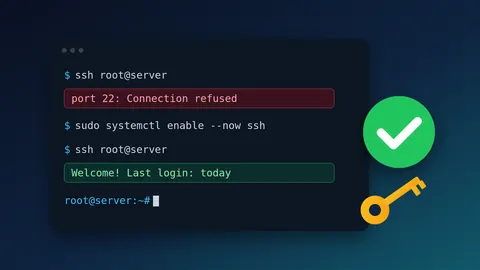
Can't SSH into your server? Whether you get "Connection refused" on port 22, a timeout or "Permission denied (publickey)", here's what each error means and how to fix it in a few minutes, even when you're locked out.

Your site shows "502 Bad Gateway" and nothing else. Here's how to read the Nginx error log, find out why the app behind it stopped answering, and fix the most common causes on WordPress, PHP-FPM, Node.js and Docker.

Your server suddenly can't save files, install updates or keep its database running. Here's how to find what filled the disk, free space safely in a few minutes, and stop it from happening again.
Short answers to common questions.
For most people it is Ubuntu LTS, because it has broad software support and the widest documentation. Debian, AlmaLinux and Rocky Linux suit servers that should change slowly and predictably. Your application may call for something else, so check what your software officially supports before you deploy.
Choose Linux unless your software needs Windows. Windows Server is useful for RDP desktops and Windows-only applications, but it adds a licence fee, while Linux distributions have none. Most web apps, databases and containers run best on Linux.
Arch Linux, RouterOS and Custom ISO run on our Global plans only, and Windows Server is sold on Cloud VPS plans. Ubuntu, Debian, AlmaLinux, Rocky Linux, CentOS Stream and openSUSE are available more widely. Each operating system page lists exactly the plans it can run on.
Only Windows Server adds a licence fee to the server price. Ubuntu, Debian, AlmaLinux, Rocky Linux, CentOS Stream, openSUSE and Arch Linux are free to use, including for commercial work. RouterOS runs at MikroTik's free licence level, which limits upload to 1 Mbps per interface until you buy a higher level.
Yes, you can reinstall your server with a different operating system from the dashboard. Reinstalling erases the disk, so back up your data first. The server then starts with a clean copy of the system you chose, with the same plan, location and resources as before.
Yes. The Custom ISO option gives you an empty KVM server with no operating system, and you install your own image through the browser console in your dashboard. It suits BSD systems, NixOS, Alpine and firewall appliances that are not in our standard image list.
Open its page to compare plans and deploy.